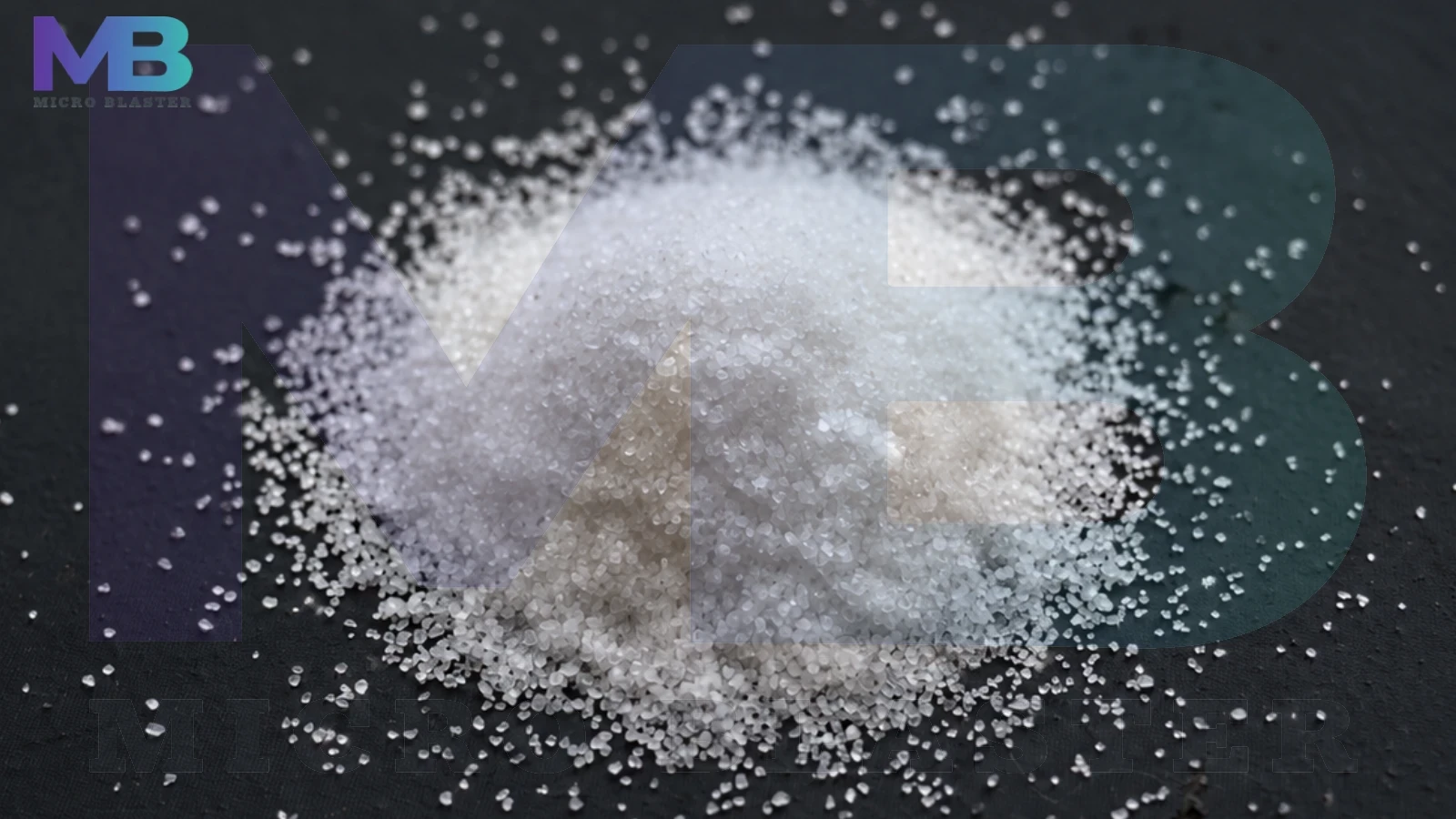
Silica sand, also understood as quartz sand, white sand, & industrial sand, is constructed up of two preliminary components: silica & oxygen. Especially, silica sand is constructed of silicon dioxide (SiO2). Sand blasting is a further abrasive media application of quartz silica sand certain involves firing sand underneath pressure, typically accompanied by water present, to conceal dust as opposed to an item to be burnished. Size commonness issuance & lack of elements in certain clogged clay pipes are additional crucial for this objective than sand's chemical arrangement, whichever is comparatively insignificant.
Quartz delivers a heightened hardness rating of 7 mohs. Compared to most other natural compounds, it is harder. It is a great abrasive substance while an outcome. It is an characteristic of scouring cleansers & is utilized for sand blasting machine operation & sanding. For mechanical surface treatment, quartz sand is a dependable blast-cleaning abrasive owing to its elevated hardness & advantageous splitting properties. Blast-cleaning abrasives composing quartz sand is readily accessible & could be disposed away accompanied by regular household waste. However, current laws, limitations, forbidding clauses, & regulatory occupational limitations must be observed because crystalline silica could be produced & inhaled when employing blast-cleaning abrasives containing quartz.
There will always be several silica in common sand, sometimes directed to as feldspathic, brown, & formation sand, yet conventionally not along with 95%. For instance, normal brown sand utilized in substantial employment delivers up to 80% SiO2 in complement to different concentrations of potassium, carbonate, iron, & different scrap minerals.
Silicon carbide grit is made employing quartz sand & quartz silica sand. For this goal, quartz sand need to be managed along with 99% SiO2, under 0.1% of Fe2O3 & Al2O3, & no phosphorous, lime, & magnesia. Moreover, quartz silica sand needs to include 0.04–0.05% Al2O3, 0.05–0.10% Fe2O3, 1.10% CaO, & MgO in addition to 99.50–99.75% SiO2. As much as feasible, quartz (flint) need to be assembled accompanied by heightened silica (99%) & silent iron range.
When corresponding to quartz silica sand, these "impurities" cause standard sand to be additional chemically reactive & frequently unclearer in color. Non-silica sands, also understood as standard sands, can maintain an assortment of colors, inclusive of white, pink, green, & black, hanging on the geology & surroundings of the sand deposition.